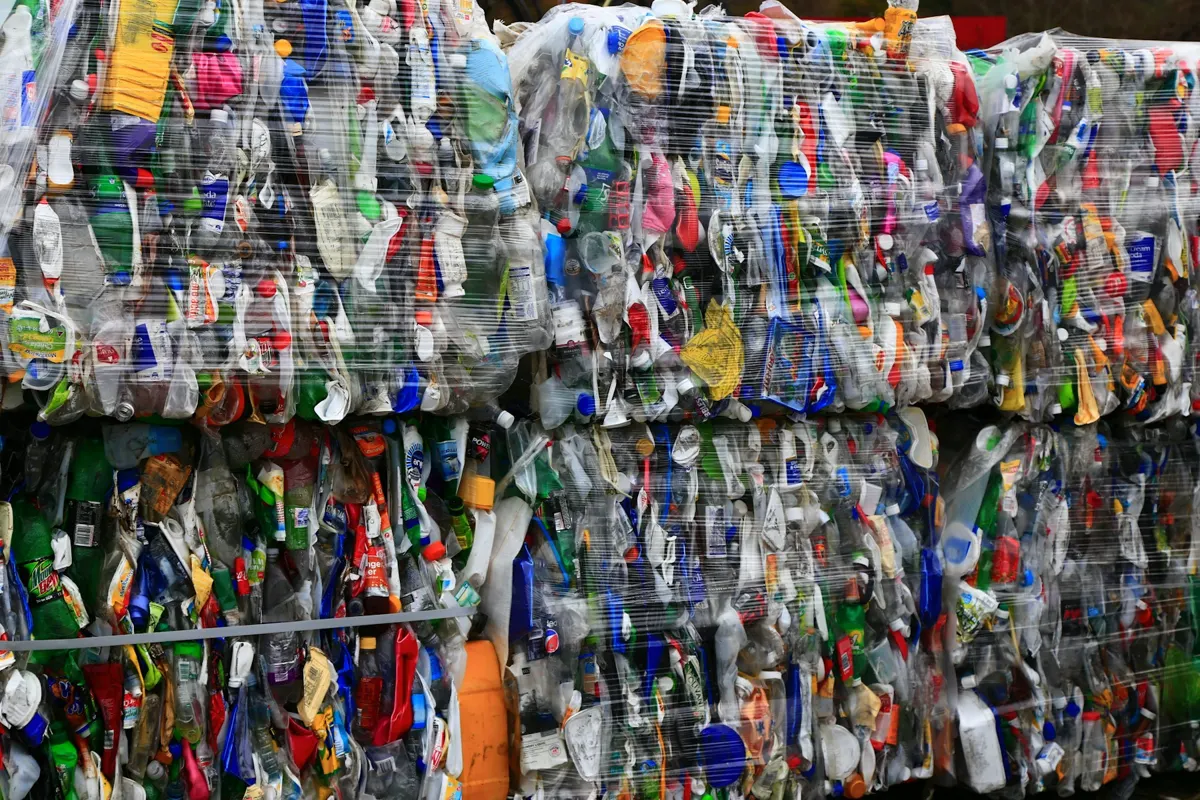
The 3 Rs of sustainability are reduce, reuse and recycle, in that order of priority. In the plastics industry, each R becomes a practical decision: less material per part, trim scrap back into the process and resin that can have a new life.
1. Reduce
This is the most important R: using less material to deliver the same product. In plastic film, this shows up as downgauging: a tougher resin, such as octene LLDPE, allows thinner film with the same performance. Fewer kilos of resin per meter of film means lower cost and less plastic at end of life.
2. Reuse
Reuse before discarding. Inside the plant, trim, flash and off-spec rolls can be reground and fed back into the process when the application allows. Returnable shipping packaging also counts here.
3. Recycle
Turning used material back into raw material. Polyethylene has its own symbol in the recycling triangle: 2 for HDPE and 4 for LDPE. Once collected, washed and reprocessed, it becomes pellets for new parts.
The 3 Rs when buying resin
- Choose the grade by its technical data sheet: the right resin avoids scrap.
- Ask for the lot's certificate of analysis: in-spec material means less loss on the line.
- Consider blends (LDPE + LLDPE) that allow thinner film.
See our LLDPE resins and the LDPE vs. LLDPE comparison.